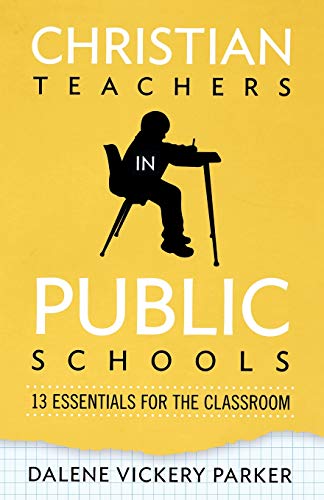
Concerns About Public Schools
Concerns about Public Schools…
How to Protect Children from Developing Passive Minds
Success in school--and in life--requires an active and independent mind. It would be nice if that came easily, but quite the opposite is true. And what's worse is that today, without realizing it, we are training and encouraging our children to become just the opposite--passive. As parents, we can teach our children social skills. This is not the job of our schools.
Exploring Single Black Mothers' Resistance Through Homeschooling
This work looks at contemporary Black homeschooling as a form of resistance among single Black mothers, exploring each mother's experience and perspective in deciding to homeschool and developing their practice. It faces the many issues that plague the education of Black children in America, including discipline disproportionality, frequent special education referrals, low expectations in the classroom, and the marginalization of Black parents. Most importantly, this work challenges stereotypical characterizations of who homeschools and why.
Government Cafeteria?
Just suppose for a minute that in addition to our education, government officials suddenly took it into their heads to control what we eat? Some of the big wigs figured that we common ignorant folk were not capable of making good nutritious meals, so they formed a plan and with a huge chunk of our tax dollars, built government run cafeterias (Food Distribution Centers). Sound depressing? Well, take heart, because the American people would never stand for anyone telling them what they can and cannot eat. But wait a minute....isn't this exactly the approach the government has taken with education?
Saving the Children
It is sometimes said, by public school supporters, that if some children are taken out of the system to go to other schools, the public schools will deteriorate. And so, the thinking goes, parents have a "duty to society" to keep their kids in the public schools, even though they have already deteriorated almost beyond recognition. How absurd that the government schools think of the children as serving the schools' or society's needs instead of the other way around. It's not the school system that needs saving, or even reforming. It's the children who need to escape from the failing government schools and be allowed to home school or attend successful private schools, without the penalty of paying twice -- once with taxes and again for tuition.
Parents, Are You Ready To Teach Your Kids Arithmetic?
Parents are starting to realize that "fuzzy" math courses (variously called "whole math," "new math" or "new new math") are producing kids who can't do arithmetic, much less algebra. The U.S. Department of Education responded last October by officially endorsing ten new math courses for grades K-12, calling them "exemplary" or "promising" and urging local school districts to "seriously consider" adopting one of them. The recommended programs were approved by an "expert" panel commissioned by the Department of Education. But many parents believe that the "experts" are subtracting rather than adding to the skills of schoolchildren.
The Perfect Crime: How Psychology and High-Tech Marketing Have "Deformed" Education
Beverly K. Eakman explains how, as a teacher, she saw that public schools are places where bad ideas are legitimized. She discusses the evolution of educational policy thought and the psychologizing of the educating process. This is a fascinating look at the state of the educational system today.
The Myth of Teacher Qualifications
Most education officials publicly claim that teachers need special “qualifications” in order to be effective. As a result, public education organizations often promote legislation or an interpretation of the law which would require home school parents to have one of three qualifications: 1) a teacher certificate, 2) a college degree, or 3) pass a “teacher’s exam.” Although this seems reasonable on the surface, such requirements not only violate the right of parents to teach their children as guaranteed by the First and Fourteenth Amendments, but virtually all academic research documents that there is no positive correlation between teacher qualifications (especially teacher certification requirements) and student performance.
Against School
This essay was written for the Harper's Magazine forum, "School on a Hill." John Taylor Gatto discusses how public education cripples our kids and why.
Thinking of Homeschooling to Escape the Common Core?
This Facebook page offers information and support for parents opposed to Common Core who are now considering homeschooling.
Ten Reasons Not to Homeschool
A satirical look at the differences between public and home education.
Universal Preschool
There is a national campaign to institutionalize all preschoolers through government funded and/or mandated "universal preschool." This group seeks to redefine universal preschool as an unheralded worldwide community of loving, functional parents who exercise their right and authority to nurture and teach their young children at home.
The Seduction of Homeschooling Families
Do the public school authorities feel threatened by homeschooling? Judging by their efforts to lure homeschooling families into dependence on local school districts, the answer is apparently yes. For the last several years, homeschooling has been the fastest growing educational alternative in the country. The sheer number of homeschoolers represent a distinct threat to the hegemony of the government school monopoly. Qualitatively, the academic success of homeschoolers, measured by standardized test scores and recruitment by colleges, debunk the myth that parents need to hire credentialed experts to force children to learn.
Students Against Testing
This website offers an alternative look at standardized testing. Students Against Testing was created to be a strong force against the score-obsessed education machine known as standardized testing. At the same time, SAT also exists as an advocate for bringing positive, creative and real-life learning activities into the schools.
How Home Schooling Will Change Public Education
More than 1.2 million students are now being taught at home, more students than are enrolled in the entire New York City public school system. Paul T. Hill reports on the pros and cons of learning at home—and the effects home schooling will have on public schools.
Socrates and the School Fraud
Over two thousand years ago, Socrates told us that if someone started charging money for teaching the youth things that are well known to virtually every adult in the society, it would be fraud. Today, that fraud is well established in our country. Schooling has been taken over and adulterated by government for political purposes and enforced by laws of compulsion. It has been corrupted by teacher unions that keep well educated people out of the public schools by requiring the teachers to be not only "certified" but union members. Those requirements guarantee that only mediocre caliber people will work in the government-run schools.
Resources
-
 On Being a Scientist: A Guide to Responsible Conduct in Research: Third Edition
 -
 Evaluation of Health Concerns in a Public Middle School ? Virginia (Health Hazar...
 -
 Weapons of Mass Instruction: A Schoolteacher's Journey Through the Dark Wor...
 -
 Handbook on the Psychology of Pricing: 100+ effects on persuasion and influence ...
 -
A Treatise on Domestic Economy For the Use of Young Ladies at Home and at School...
-
Life in the Marshall Islands: Then and Now
-
 Shifting the Monkey: The Art of Protecting Good People From Liars, Criers, and O...
 -
 Reference Manual on Scientific Evidence: Third Edition